
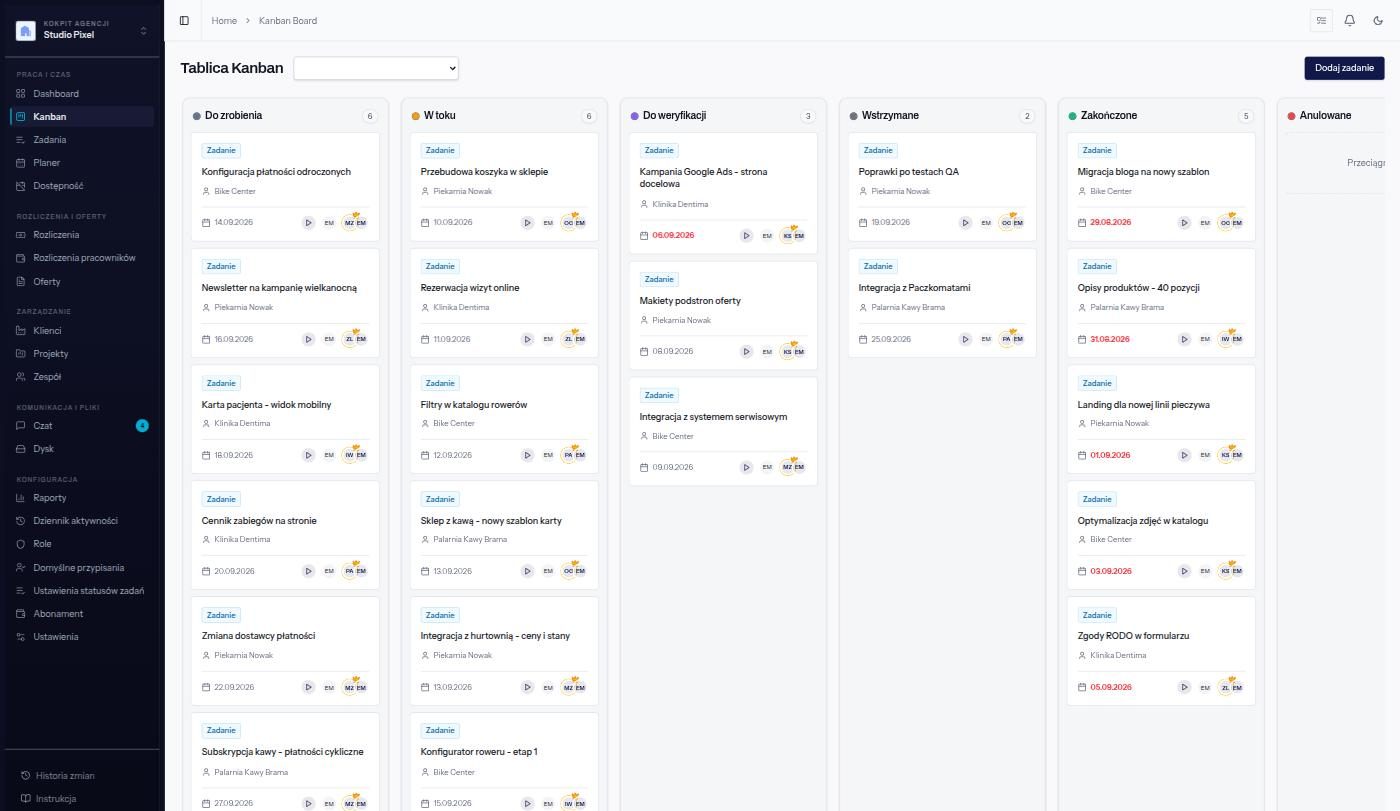
One list instead of four channels
Requests come by email, chat, phone and in meetings. Until they share one place, each of them lives its own life, and answering "where do we stand" means going through four sources. In Yuteki a request lands on one list - the client enters it in their portal, an employee creates the task by hand or straight from a chat message. From that moment the matter has one address.
Who does it, who checks it, who only watches
A task does not have a single "assignee". It has roles: assignee, reviewer and observer. The distinction sounds minor until you have to figure out why something went to the client without being checked. The observer gets notifications and sees progress, but is not responsible for the deadline - so you can add a manager or a client to the matter without blurring responsibility.
The client's process, not the tool's process
You define the statuses and board columns yourself, separately for each client. One requires approval before publishing, another has its own testing stage, a third wants only "to do - done". The board adapts to how you actually work instead of forcing someone else's flow.